
Boxing vs Kickboxing for Fitness: An Honest Comparison From a Boxing Gym Floor
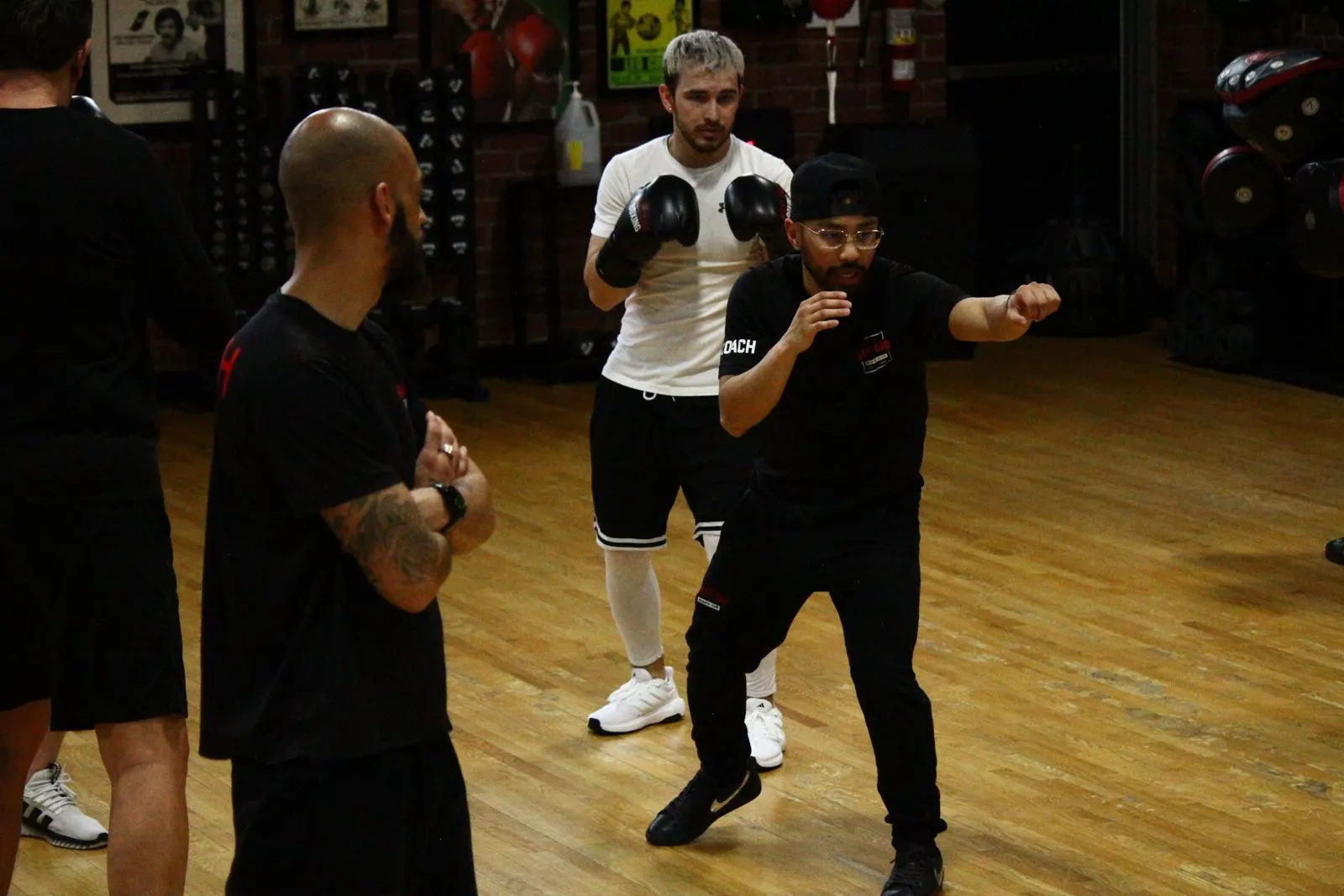
Boxing vs kickboxing for fitness usually starts as a calorie question, and that is the least useful place to start. For the same effort the two land in a broadly similar place, and kicking does not add the premium most people expect.
The real differences live elsewhere, in coordination, gear, and coaching. Here's exactly where.
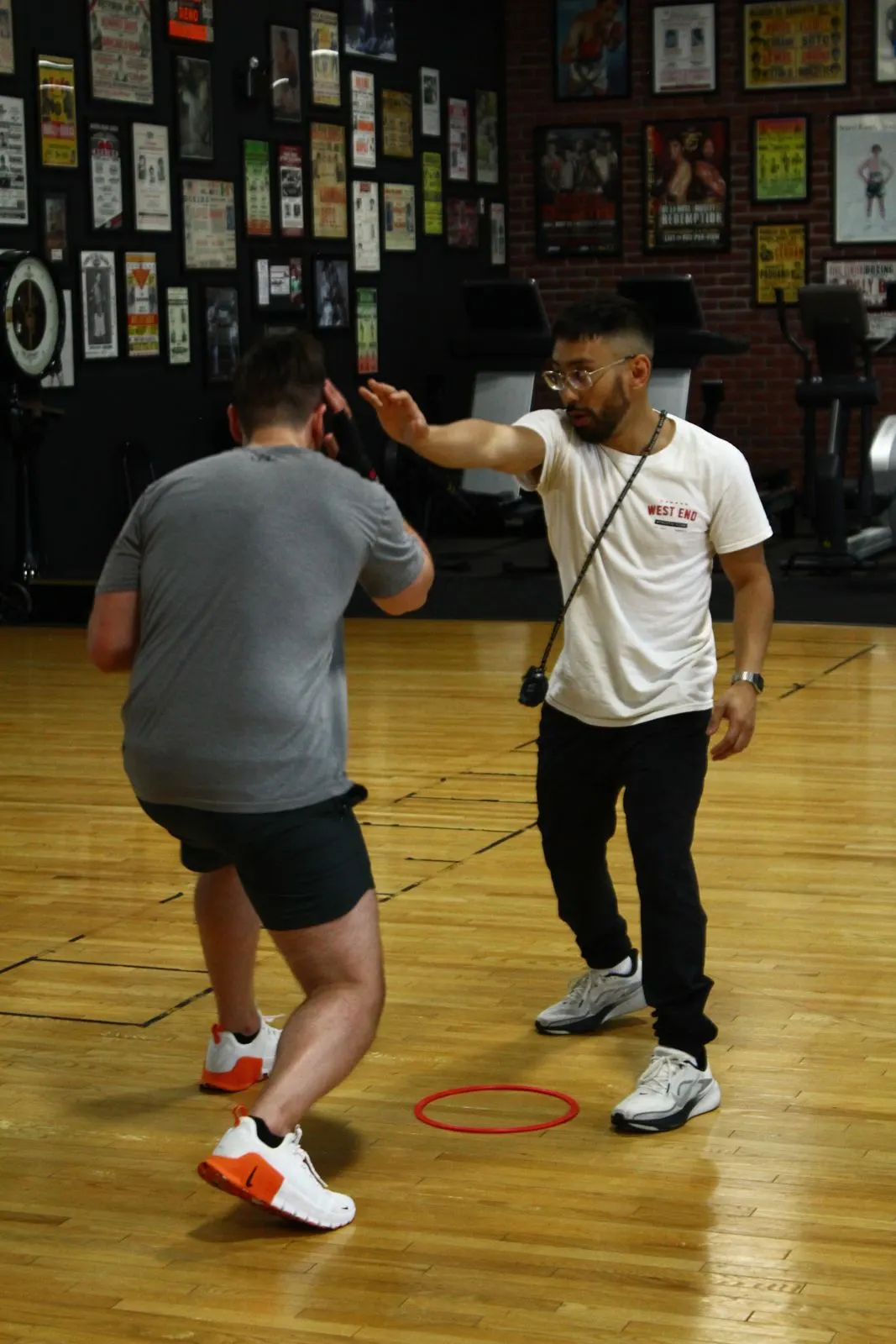
- For the same effort, boxing and kickboxing-style training place broadly similar demands on your energy system, so calorie burn is not what separates them.
- West End Athletic Club runs 36 classes a week across 11 programs at 283 Bering Ave in Etobicoke, and every one of them is boxing-based, not kickboxing.
- Youth boxing at West End is built for ages 4 to 16, taught by coaches that include a 3-time Canadian Heavyweight Champion and a Team Canada boxer.
- New members get 3 Classes for $30 to try classes before deciding on a program, no pressure attached.
- Women's-only classes run on a separate schedule from mixed classes for members who prefer that setting.
- Boxing asks you to coordinate your hands, hip rotation and footwork. Kickboxing adds leg technique and balance on a standing leg, which is more to learn before the movement feels controlled.
What actually drives the workout in either discipline. Kickboxing does not sit in a dramatically higher band than boxing for the same effort.
Where This Comes From
We are not going to put a precise calorie figure on this. Published activity charts price boxing and kickboxing-adjacent training by body weight and effort, and once you account for how differently two people work the same round, a single number would be false precision. What we can tell you is what we see on the floor.
The gear, class-structure, and skill-curve observations below come from a different source: what we actually see on the floor at 283 Bering Ave in Etobicoke, running 36 classes a week across 11 programs since 2015. That's boxing fundamentals, fitness boxing, strength and conditioning, women's-only classes, youth boxing for ages 4 to 16, sparring, and an amateur fight team. Kickboxing isn't one of the 11. More on why that's actually useful information further down.
For youth-specific guidance, we lean on the Canadian 24-Hour Movement Guidelines for children and youth aged 5 to 17, which recommend at least 60 minutes of moderate-to-vigorous physical activity daily. For anything touching amateur competition structure, sparring standards, or fight-team pathways, Boxing Canada is the national governing body worth checking, not a gym's marketing page.
The Findings
Here's the side-by-side we wish more gyms published honestly instead of picking a winner and calling it a day. This isn't a scoreboard. It's a breakdown of what each discipline actually asks of your body, your gear bag, and your schedule.
| Category | Boxing | Kickboxing |
|---|---|---|
| Calorie burn (30 min) | Driven by pace and round intensity, not by the number of limbs used | A comparable range on the same chart, varying with kick volume, pace and body weight |
| Primary tools | Hands only: jab, cross, hook, uppercut, footwork, head movement | Hands plus legs: adds roundhouse, front kick, and knee strikes to the toolkit |
| Typical gear | Hand wraps, boxing gloves (brands like Everlast, Ringside, or Cleto Reyes are industry standards), mouthguard | Same hand gear plus shin guards (Fairtex, Twins Special, Sanabul are common names in the trade) |
| Beginner learning curve | Upper-body mechanics only; the whole learning curve sits in the upper body | Adds hip rotation and balance on one leg; typically an extra week or two before kicks feel controlled |
| Joint and flexibility demand | Shoulders, wrists, and rotational core work dominate | Adds hip flexors, hamstrings, and standing-leg stability into the load |
| Offered at West End Athletic Club | Yes, across boxing fundamentals, fitness boxing, women's classes, youth boxing (ages 4-16), sparring, and the amateur fight team | Not currently in the 11-program lineup at 283 Bering Ave |
What Most People Get Wrong
The calorie gap between the two disciplines is narrower than the marketing around kickboxing suggests. Once you factor in that most fitness kickboxing classes across the industry keep kicks at bag-height rather than head-height for safety, the extra muscle recruitment doesn't translate into a huge calorie premium over boxing. That flattens a debate a lot of marketing copy tries to keep alive.
There is also a wording gap worth naming: "kickboxing" is often used to mean any hard striking-style cardio class rather than the discipline itself. If that is what you are after, fitness boxing gives you the same sweat and the same heart rate without the extra joint load that kicks introduce.
We also don't teach kickboxing on purpose, not because we can't, but because our coaching depth is boxing. A 3-time Canadian Heavyweight Champion and a Team Canada boxer built their careers on hands, footwork, and defence. That's what they teach best. Spreading that expertise thin across a second striking discipline would water down the thing members actually come to Etobicoke for.
Kickboxing looks more athletic, so people assume it burns dramatically more. On paper, and on our bag floor, boxing keeps pace with it. What actually separates the two is coordination demand.
What This Means for You
If you're a complete beginner in Mimico, Bloor West Village, The Junction, or anywhere else across Etobicoke trying to decide between the two, calorie burn shouldn't be the deciding factor. It's close to a wash. Decide based on what you actually want to get good at: pure hand skill and footwork, or a broader striking toolkit that includes legs.
This is for the reader who has never thrown a punch in a gym setting before, not the reader already choosing between competitive circuits. If that's you, boxing has a lower initial coordination barrier since you're only coordinating your hands, hips rotation, and footwork, without adding a standing-leg balance challenge on top.
West End's 11 programs cover the range most beginners actually need: boxing fundamentals for technique, fitness boxing for conditioning without contact sparring pressure, and women's-only classes for members who prefer that room. Parents in Sunnylea, Islington, and The Kingsway looking for structured youth boxing for ages 4 to 16 will find that program built specifically for that age band, not adapted from an adult class.
Every new member gets 3 Classes for $30 to try classes before committing to anything. That's the honest way to answer "boxing or kickboxing for me" anyway: step onto the bag floor and see how your body actually responds, rather than guess from a chart.
Our take after years of coaching boxing
Most beginners overweight the calorie question and underweight the coaching question. The workout you'll actually stick with is the one where a coach corrects your guard, not the one with the theoretically higher calorie ceiling. That's the whole reason we've kept our roster focused on boxing since 2015 instead of chasing every trending format.
What actually matters is whether a beginner feels safe enough in week one to come back for week two. That's coaching quality, class size, and how a room feels, not which discipline burns eleven more calories per round.
If a friend asked us straight up which to try first: come throw hands for three classes and decide from there. That is how most people at 283 Bering Ave decided, and it is a better test than any chart.
FAQ
How is calorie burn measured for boxing vs kickboxing for fitness?
Calorie burn for either discipline is usually estimated from body-weight-adjusted activity charts, and it moves far more with your pace and round intensity than with whether you are kicking. The added leg movement does not multiply energy output as dramatically as people assume.
Does West End Athletic Club offer kickboxing classes in Etobicoke?
No, West End Athletic Club at 283 Bering Ave runs 11 programs and 36 classes a week, all built around boxing, not kickboxing. Members who want striking-based fitness get boxing fundamentals, fitness boxing, women's-only classes, and youth boxing for ages 4 to 16 instead.
How are youth boxing classes structured for ages 4 to 16?
Youth boxing at West End is structured specifically for ages 4 to 16, run separately from adult programming, with coaching from a 3-time Canadian Heavyweight Champion and a Team Canada boxer. This age-specific structure aligns with the Canadian 24-Hour Movement Guidelines, which recommend at least 60 minutes of daily moderate-to-vigorous activity for kids aged 5 to 17.
What should a complete beginner expect in their first fitness boxing class?
A complete beginner at West End can expect hand wraps, a pair of gloves, and coaching through basic stance, jab, and footwork before any bag work begins. New members get 3 Classes for $30 to try classes at 283 Bering Ave before deciding on any program, with no kickboxing element required since the gym's full curriculum is boxing-based.
Sources
- Calorie burn ranges for boxing (sparring) and comparable activities - Harvard Health Publishing
- Group exercise and vigorous-intensity striking workout guidance - American Council on Exercise (ACE)
- Daily physical activity recommendation for children and youth aged 5-17 - Canadian 24-Hour Movement Guidelines, CSEP
- Amateur boxing structure, sparring, and competition standards in Canada - Boxing Canada
- Program lineup, class schedule, and coaching credentials - West End Athletic Club
West End Athletic Club
Boxing Done Right, at 283 Bering Ave in Etobicoke. Call 416-621-1234 or visit westendac.com to ask a coach directly.
Try 3 Classes for $30 →🎧 Listen to article