
How West End Athletic Club Builds a Complete Beginner Into a Confident Boxer in Islington, The 4-Stage Path
Last updated: September 27, 2026
Published September 27, 2026 · Updated September 27, 2026
This is, in some form, the question we hear most from complete beginners across Etobicoke's west end.
How the beginner boxing program in Islington, Etobicoke works at West End Athletic Club: complete beginners move through four stages (Foundations, Engine, Controlled Contact and Confident Boxer) in 50-minute coached classes at 283 Bering Ave. It's built for adults who have never thrown a punch, sparring is optional at every stage, and the simplest way to start is the intro offer of 3 Classes for $30.
- West End Athletic Club runs 36 classes a week across 11 programs at 283 Bering Ave in Etobicoke, including boxing fundamentals, fitness boxing, strength and conditioning, sparring and an amateur fight team.
- Every class at West End Athletic Club is 50 minutes long, so three classes a week adds up to 150 minutes, the weekly activity benchmark in Canada's 24-Hour Movement Guidelines for adults.
- The 4-stage beginner path runs Foundations, Engine, Controlled Contact and Confident Boxer, and sparring from Stage 3 onward is always optional.
- Complete beginners can start with the intro offer of 3 Classes for $30; a 2-week intro offer also exists, and its details are available by calling 416-621-1234.
- West End's coaches include a 3-time Canadian Heavyweight Champion and a Team Canada boxer, and the club also runs youth boxing for ages 4-16 and women's-only classes.
The Short Answer: How Does the Beginner Boxing Program in Islington, Etobicoke Work?
The beginner boxing program at West End Athletic Club, open to Islington residents and the rest of Etobicoke, works as a four-stage path: learn the fundamentals, build your engine, try controlled contact if you want it, then train as a confident boxer. Each stage uses classes that are already on the club's 36-class weekly schedule, so progress means adding new classes to your week, not graduating out of a waiting room.
Most people assume fitness is what holds beginners back. It usually isn't. In our experience, the real barrier is not knowing what happens once you walk through the door, and that's exactly what this answer lays out.
If you're a commuter on the Kipling/Islington corridor or a parent in The Kingsway who has never thrown a punch and feels a little intimidated by boxing gyms, this path was designed for you. It is not a sparring boot camp. Nobody gets put in the ring on day one.
The Full Answer: What Happens at Each Stage for a Complete Beginner in Islington?
The 4-stage path at West End Athletic Club turns a complete beginner into a confident boxer by adding one layer at a time: technique, conditioning, contact, then consistency. The table below shows how the stages map onto the club's real programs, followed by what each stage involves and the signs you're ready to move on.
| Stage | Main focus | West End classes used | Contact level |
|---|---|---|---|
| 1. Foundations | Stance, guard, jab, cross, footwork, wrapping hands | Boxing fundamentals | None (bags and pads only) |
| 2. Engine | Holding technique under fatigue, leg and core strength | Fitness boxing, strength and conditioning | None |
| 3. Controlled Contact | Reading punches, staying calm under light pressure | Beginner Sparring (optional) | Light, coached, technical |
| 4. Confident Boxer | Self-directed training, taking coaching mid-round | Sparring, amateur fight team (optional) | Your choice, coach-guided |
Stage 1, Foundations: What Actually Happens in Your First Boxing Class in Etobicoke?
Stage 1 at West End Athletic Club is built on boxing fundamentals classes, where complete beginners learn stance, guard, the jab, the cross and basic footwork before anything else. Each class runs 50 minutes, paced so a first-timer can keep up while someone a few weeks in still gets pushed.
The first thing most people notice is the sound. Heavy bags thudding across the bag floor, the ring bell cutting each round, gloves popping on pads, and that smell of leather and hard work that every real boxing gym has. It's loud, and within a few rounds it stops feeling intimidating and starts feeling like fun.
Here's how a first visit to learn boxing from scratch in Toronto's west end typically unfolds:
Grab the 3 Classes for $30 intro through the contact page or by calling 416-621-1234, and pick a boxing fundamentals class from the weekly schedule.
Park free at 283 Bering Ave, tell the coach it's your first class, and mention any old injuries before you start.
If you've never wrapped before, ask a coach to show you; a proper wrap protects the knuckles and wrist before you ever touch a bag.
Fundamentals classes start with movement and the basic boxing stance, because every punch you'll ever throw starts from your feet.
You'll put the jab and cross together on the heavy bag in timed rounds, finish with some conditioning, and you can wind down in the sauna afterward.
Honestly, the jab is the punch beginners underrate most. It looks like the simplest move in the sport, yet it's the punch coaches keep refining long after the basics feel comfortable, because nearly everything else in boxing is built off it.
You're ready for Stage 2 when you can hold your guard through a full round, throw a clean jab-cross without dropping your rear hand, and move around the bag without crossing your feet.
Stage 2, Engine: Why Do Fitness Boxing and Strength Training Come Next?
Stage 2 adds fitness boxing and strength and conditioning classes to your week, because good technique falls apart the moment your lungs and legs give out. An amateur boxing round lasts 3 minutes, and for most beginners the back half of that round is where the guard drops and the feet go flat.
Fitness boxing keeps you punching at a higher tempo on the bags, so conditioning and technique grow together instead of competing. Strength and conditioning on the club's strength floor builds the legs, hips and core that punches actually come from. Power is a full-body thing.
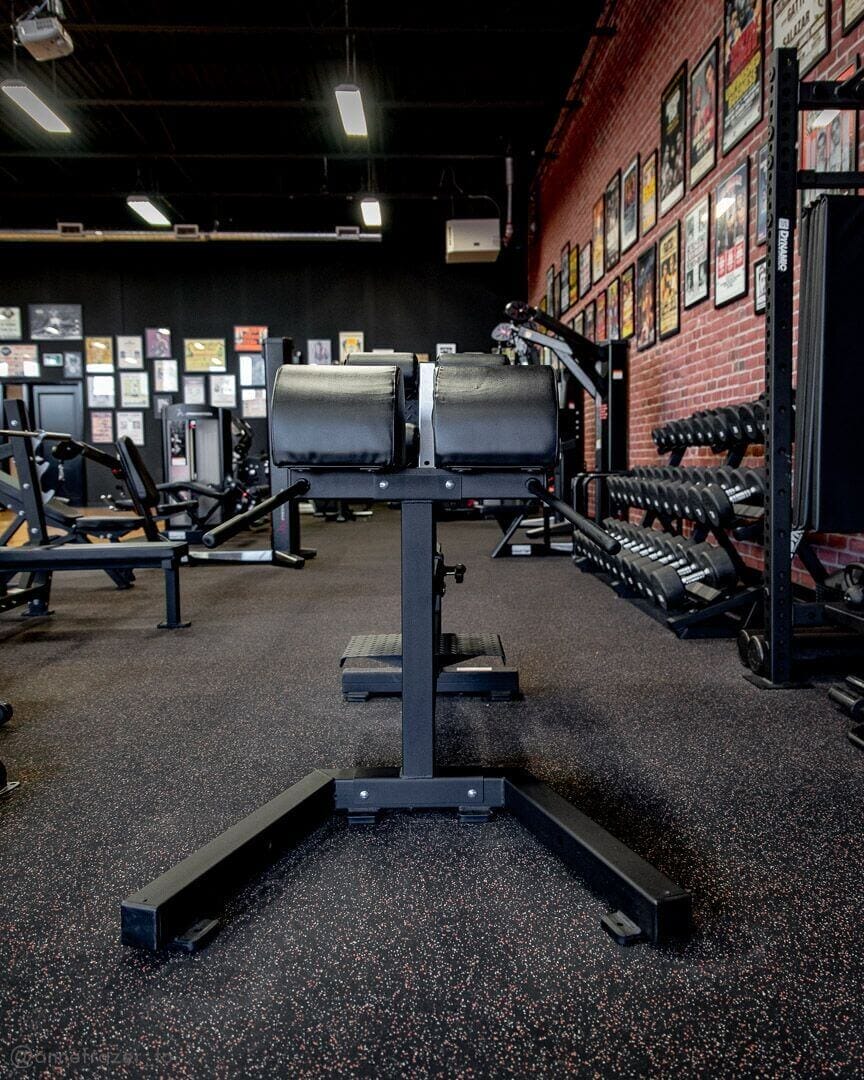
Actual photo: the strength floor at West End Athletic Club, 283 Bering Ave, where Stage 2 conditioning work happens.
Stage 2 is also where the routine starts to stick. Picture a February evening, slush soaking through your shoes on the walk in, and you go anyway because the class has become part of your week. That's the moment a beginner starts turning into a boxer.
You're ready for Stage 3 when your technique holds up in the last round of a fitness boxing class, you recover your breathing between rounds, and you're curious (not just brave) about what sparring feels like.
Stage 3, Controlled Contact: Do You Have to Spar?
Sparring is never required at West End Athletic Club; Stage 3 is an optional step where beginners who want to test their skills join Beginner Sparring, a coached, controlled and technical class in the club's full ring. It is not a slugfest, and it isn't meant to be.
Beginner Sparring is about touching, not hurting. The goal is to see a jab coming, keep your guard up under light pressure, and stay calm when someone moves back at you. Most people are surprised by how much thinking it takes.
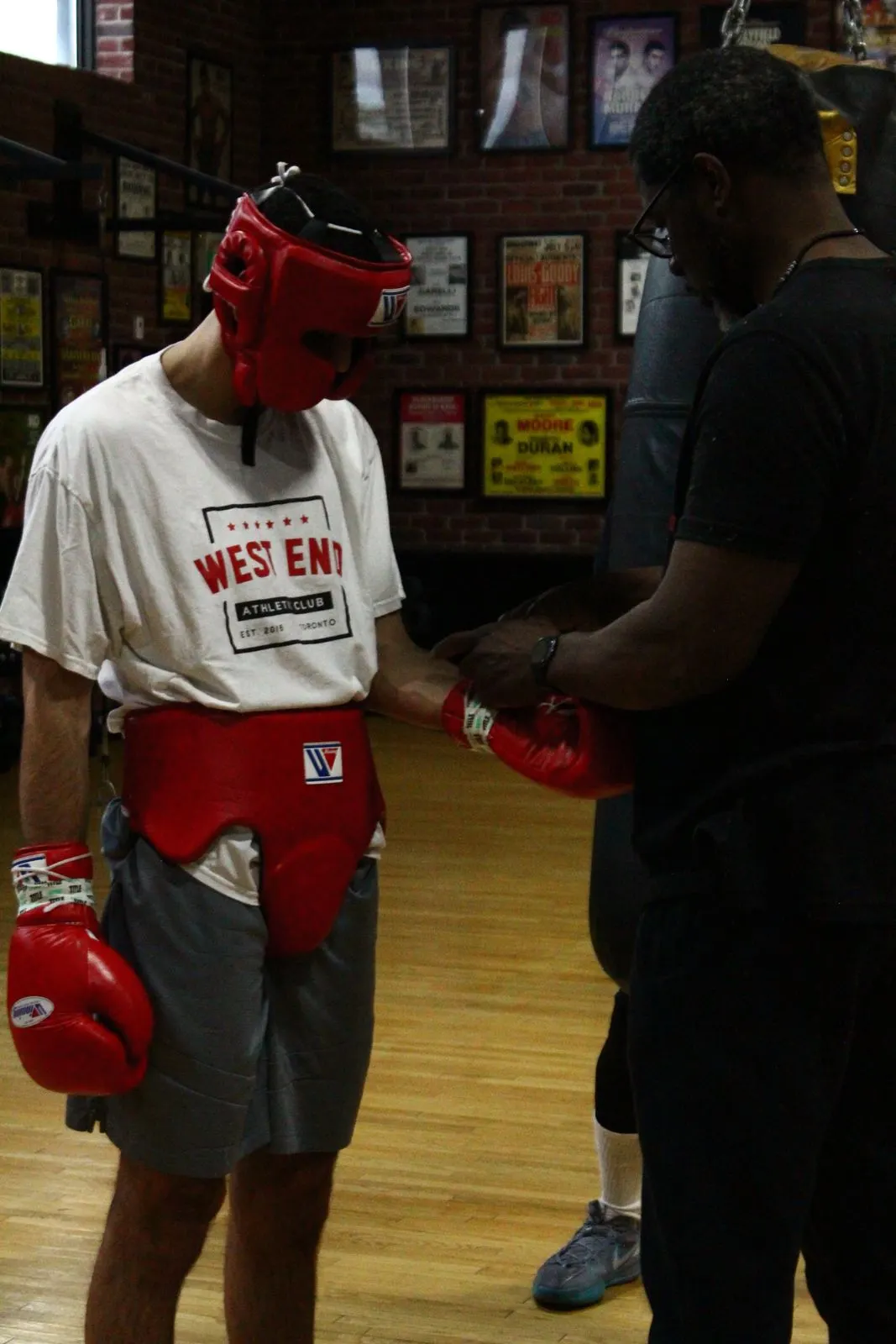
Actual photo: a Beginner Sparring session in the ring at West End Athletic Club.
Sparring gear adds a mouthguard and 16 oz gloves, which are the common standard for sparring because the extra padding protects both partners. In our experience, many beginners never spar at all, and they still become sharp, fit, confident boxers. Contact is a tool, not a test.
You're ready for Stage 4 when you can stay composed through a full sparring round, respond to a coach's instruction mid-exchange, and control your power so your partner wants to work with you again.
Stage 4, Confident Boxer: What Does Confident Actually Look Like?
A confident boxer at West End Athletic Club is someone who walks in, wraps up, and knows exactly how to use the 50 minutes of class without needing to be told what comes next. Confidence here doesn't mean aggression; it means competence you can feel.
At Stage 4, you take coaching on the fly, you breathe under pressure, and sparring (if you've chosen it) becomes a regular part of your week. For anyone who catches the competition bug, the amateur fight team is the next door, and competitive amateur boxing in Canada runs under Boxing Canada, the national governing body.
That standard comes straight from the coaching floor. West End's coaches include a 3-time Canadian Heavyweight Champion and a Team Canada boxer, and the same eye that prepares competitive fighters is the one watching a first-timer's jab. Same gym. Same standards.
How Many Boxing Classes a Week Should a Beginner Take?
Two to three classes a week is the sweet spot for most beginners at West End Athletic Club, and three 50-minute classes adds up to exactly 150 minutes. Canada's 24-Hour Movement Guidelines recommend adults get at least 150 minutes of moderate-to-vigorous physical activity per week, so three classes covers that benchmark on their own.
That's why the intro offer, 3 Classes for $30, lines up so neatly: it's one full guideline week of boxing. Our suggestion for that first week is two boxing fundamentals classes and one fitness boxing class, with a rest day between each so your shoulders and calves can recover.
What Boxing Gear Does a Complete Beginner Actually Need?
A complete beginner needs three things for Stage 1: hand wraps, boxing gloves and flat-soled trainers. Standard 180-inch wraps from brands like Everlast, Title Boxing or Hayabusa give enough length to support the knuckles and wrist properly.
For gloves, most beginners train bag work in 12 oz or 14 oz gloves, while 16 oz is the common sparring weight. Everlast, Title Boxing, Hayabusa, RDX and Cleto Reyes all make gloves beginners use, and it's worth asking the club about gear before you buy so you don't end up with the wrong weight for your size.
A mouthguard, such as a boil-and-bite model from Shock Doctor or SISU, only becomes essential at Stage 3. Skip the fancy shorts. Comfortable workout clothes and a water bottle are all that matter in week one.
The time it takes a beginner to feel confident at a boxing gym varies from person to person, and we won't pretend there's a fixed timeline. In our experience, consistency predicts progress far better than athleticism: someone who shows up two or three times a week, every week, usually feels at home on the bag floor well before a naturally fit person who drops in occasionally.
When the Answer Is Different: Who Should Start Somewhere Other Than Stage 1?
The 4-stage beginner path at West End Athletic Club fits most adults, but five groups start differently: kids and teens, women who prefer women-only training, returning boxers, people managing injuries, and people who never want contact. Here's how the path changes for each.
Kids and teens. Youth boxing at West End covers ages 4-16 and runs as its own program, separate from the adult path. For parents across Etobicoke, that means young boxers learn fundamentals, discipline and footwork alongside kids their own age rather than in adult classes.
Women who prefer a women-only room. West End runs women's-only classes, including Women's Sculpt & Strong, for women who want to learn in that environment. Many women use these classes as their Foundations and Engine stages, then decide later whether to mix into co-ed classes.
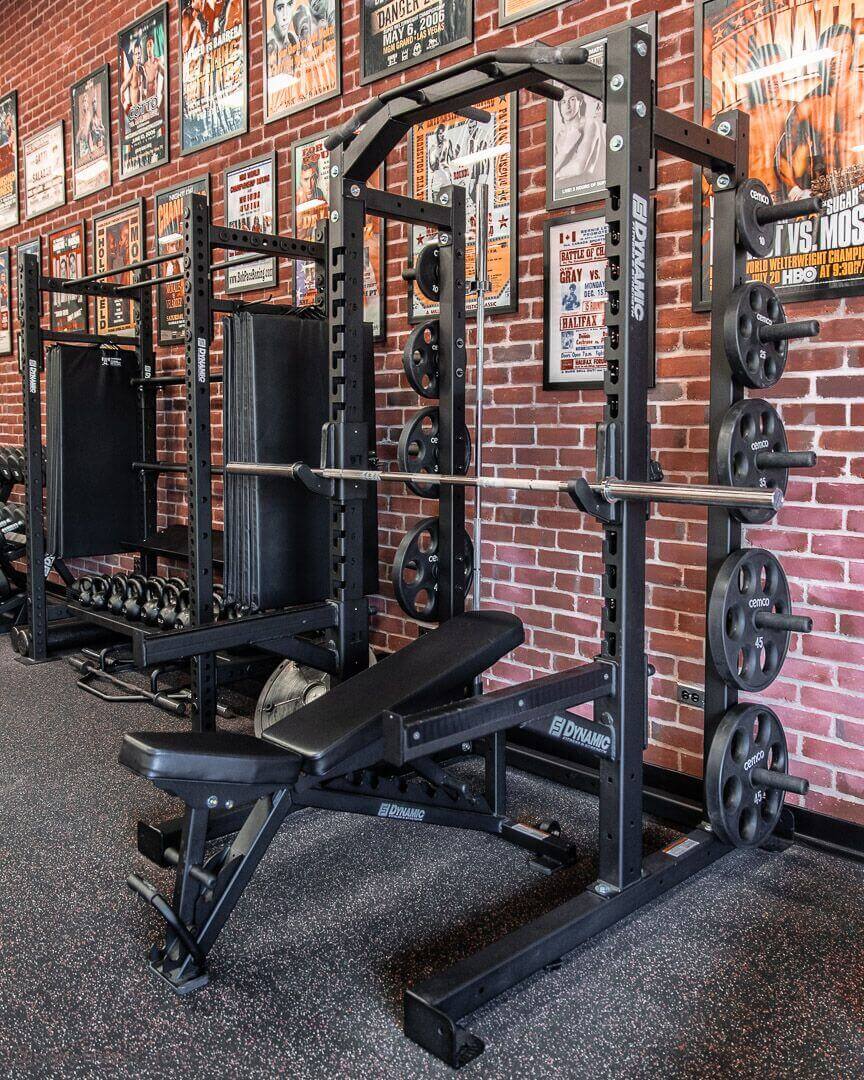
Actual photo: a Women's Sculpt & Strong class at West End Athletic Club.
Returning boxers and martial artists. If you boxed years ago or come from kickboxing or Muay Thai, tell your coach on day one. Stance habits from other sports need adjusting, but you may move through Stage 1 quickly and spend more time in Stage 2 rebuilding your conditioning.
People managing injuries or health conditions. Anyone with shoulder, wrist, back or heart concerns should check with a doctor or physiotherapist before starting any new training program. Tell your coach too, so drills can be adjusted from the first class.
People who never want contact. Stages 1 and 2 are a complete training program on their own. Plenty of people box purely for fitness, stress relief and skill, and that's a fully legitimate way to train at West End.
If you'd rather settle in over a longer window than three classes, the club also offers a 2-week intro option. Its price and terms aren't published, so call 416-621-1234 or visit westendac.com to ask about it, along with membership and class-pack details.
Our Take After Coaching Beginners in Etobicoke Since 2015
Coaching complete beginners at West End Athletic Club since 2015 has taught us that people overweigh the wrong things. They worry about being unfit, about buying the right gloves, about looking awkward in front of experienced boxers. None of that decides whether you'll succeed.
What actually matters is showing up consistently, taking the jab seriously, and asking questions when something feels off. We'd rather coach a nervous beginner who comes three times a week than a gifted athlete who comes when it's convenient. That's the energy of family and the standards of champions working together: we'll welcome you warmly, and we'll correct your guard every single time it drops.
If a friend from Islington asked us how the beginner boxing program works and where to start, we'd tell them one thing: book your 3 Classes for $30 inside a single week, not spread over a month. Three sessions close together is where the movements start to click, and it's the fastest way to find out whether boxing is for you.
Beginner Boxing FAQ: What Else Do People in Etobicoke Ask?
Do I need to be fit to start a beginner boxing program in Etobicoke?
A beginner boxing program in Etobicoke does not require any starting fitness level at West End Athletic Club. Stage 1 boxing fundamentals classes run 50 minutes and focus on stance, guard and footwork before intensity, so your fitness builds as you go.
How much does the beginner boxing intro cost at West End Athletic Club?
The beginner boxing intro offer at West End Athletic Club is 3 Classes for $30, covering three 50-minute classes at 283 Bering Ave in Etobicoke. A 2-week intro offer is also available; call 416-621-1234 or visit westendac.com for its details and for membership and class-pack information.
Is sparring mandatory in the West End beginner program?
Sparring at West End Athletic Club is optional at every stage of the 4-stage beginner path. Beginners can train boxing fundamentals, fitness boxing and strength and conditioning without ever joining Beginner Sparring, and stepping into the ring is a choice you make with your coach's guidance.
Can kids and women join beginner boxing in Etobicoke?
Kids and women both have dedicated options at West End Athletic Club in Etobicoke. Youth boxing covers ages 4-16, and women's-only classes run alongside the co-ed schedule for women who prefer that training environment.
Sources
- Weekly adult physical activity benchmark of 150 minutes of moderate-to-vigorous activity: Canadian 24-Hour Movement Guidelines (CSEP)
- National governing body for amateur boxing in Canada: Boxing Canada
- Line 2 Bloor-Danforth subway service through Islington and Kipling stations: Toronto Transit Commission
- Club programs, 50-minute class length, address, coaching credentials and the 3 Classes for $30 intro offer: West End Athletic Club official website
West End Athletic Club
Boxing gym in Etobicoke, Toronto at 283 Bering Ave.
Start Stage 1 of Your Beginner Boxing Path: 3 Classes for $30 →- Are You Ready to Spar? How West End Athletic Club Decides When a Beginner Moves From Bag Work to the Ring
- Fitness Boxing vs Strength and Conditioning: Which Class at West End Athletic Club Fits Your Goal?
- Drop-In Boxing Classes vs Structured Program: Which Gets Results Faster in Etobicoke?
- A Gym Member Asked: "Is Boxing Training Safe If I've Never Thrown a Punch?" — A Coach's Honest Answer
- Your First Boxing Class in Etobicoke: What Actually Happens in the First 50 Minutes